He graduated from Georgia Institute of Technology with a Ph.D. in Nuclear Engineering in 1990, and spent 35 years in the fields of the accelerator and the nuclear fusion in Korea. He participated in several large research infrastructure construction projects such as the SC accelerator and the experimental SC fusion reactor. He is currently working as the Acting Director at the Institute of Rare Isotope Sciences (IRIS) under the Institute for Basic Science.
Plenary Speakers
Cryogenic Fluid Management in Low Earth Orbit - Current State of the Art and Future Plans
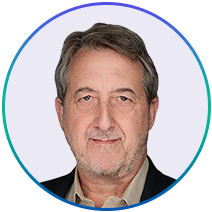
Dr. William Notardonato
Eta Space, USA
Biography
Dr. William Notardonato is founder and Chief Executive Officer of Eta Space LLC. He started Eta Space in 2019 to enable sustainable space exploration using propellant depots in space to make orbital transport vehicles refuellable. Before joining the private sector, Dr. Notardonato was a Senior Principal Investigator at the Cryogenic Test Laboratory NASA Kennedy Space Center. He became an internationally renowned expert in cryogenic refrigeration, LH2 storage and transfer, and in-space cryogenic solutions. William started his career as a Space Shuttle Operations Engineer, servicing the Fuel Cells System with supercritical hydrogen and oxygen. Dr. Notardonato earned his Ph.D. in Engineering from the University of Florida, and he has published over 50 papers in the field of cryogenics and space exploration and holds 4 patents for related work.
Development of Ultrahigh Field
All Superconducting Magnet System in China
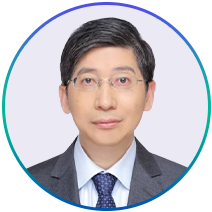
Prof. Qiuliang Wang
Chinese Academy of Sciences, China
Biography
Qiuliang Wang has dedicated over three decades to advancing magnet technology, particularly
high-field superconducting magnets, across China, Japan, South Korea, the UK, Switzerland, and
Germany. His research centered on ultra-high field superconducting magnets, permanent magnets, and
large-scale analysis software for applications spanning NMR, MRI, scientific instruments,
accelerators, medical interventions, energy storage, tokamaks, gyrotrons, magnetic separation,
biomedicine, oil industry, MHD propulsion, space spectrometers, and materials processing.
Qiuliang Wang actively fosters international and domestic collaborations in
superconducting/permanent magnets and applications, including partnerships with MIT (high-field HTS,
alpha spectrometer), Queensland University/Weizmann Institute (MRI magnets), GSI (accelerator
magnets), NFRI/Korea & CAS-Institute of Plasma Physics (tokamak magnets), CAS-High-Field Lab
(industrial partners like Siemens, Jansen, GE China).
Qiuliang Wang serves as Chief Engineer for Optimization and Upgrade of the Pulsed Strong Magnetic
Field Experimental Facility (Major Scientific Facility), Team Leader of the AMS (Alpha Magnetic
Spectrometer) Major International Cooperation Project, member of the General Expert Group for the
"Frontiers of Major Scientific Facilities" field under the Ministry of Science and Technology,
member of the International IEC-TC90 Standards Committee, member of the organizing committee of
HT4FUSION&MEM and the Scientific and Technical Program Committee of the International Conference on
Magnet Technology, and IEEE Senior Member. He also holds roles as Editor-in-Chief of journals such
as Electrical Technology, Superconductivity, and Renewable Energy Systems & Equipment, Associate
Editor-in-Chief of Transactions of China Electrotechnical Society, and editorial board member of
multiple international journals.
Qiuliang Wang has published 430 SCI-indexed papers, 6 monographs, and received over 9,000 SCI
citations (by others). Obtained authorization for 211 Chinese invention patents, 20 U.S. invention
patents, and 22 PCT international patents. His accolades include National Technological Invention
Awards (2009, 2013), National S&T Progress Award (2017), WIPO Award; in 2019, he received the Ho
Leung Ho Lee Foundation Prize for S&T Progress and was elected Academician of the Chinese Academy of
Sciences.
Brief History and Future Prospects of High-Tc Second-Generation Wire
(HTS 2G Wire)
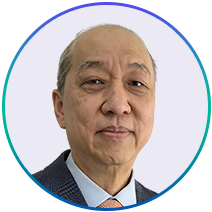
Dr. Seung Hyun Moon
SuNAM Co., Ltd., Korea
Biography
Dr. Moon serves as a CEO of SuNAM Co., Ltd., specialized in the areas of superconducting and nano materials. SuNAM produces 2G HTS wire (2nd Generation High Temperature Superconducting wire). Dr. Moon received his Ph.D in Physics at Seoul National University in 1994, and had served as a senior research staff member at LG Advanced Research Institute since 1994 before he joined Seoul National University as a faculty member in 2002. In 2004, he established SuNAM, pioneering a mass production of 2nd generation high temperature superconducting wire based on a proprietary RCE-DR (Reactive Co-Evaporation by Deposition & Reaction) process for the first time in the world. RCE-DR process is superior to the other widely known techniques such as PLD, MOD or MOCVD in its high Ic (critical current) and high productivity resulting from the fast deposition of elemental metal oxides by co-evaporation and the fast phase conversion of cation oxides into a superconducting phase under high oxygen partial pressure. SuNAM’s novel RCE-DR process was registered as a patent in US, EU, China, Japan and Russia. Dr. Moon was also awarded national prizes by Korean government including the National R&D Excellence and Basic Research Excellence for his contribution to the development of national science and technology. He has been successfully leading SuNAM as a CEO since 2004 and has put SuNAM on top superconducting wire manufacturer. Dr. Moon has given invited and plenary talks on superconductivity and its applications at national and international conferences including ASC, EUCAS, ISS, ICMC. He also authored and co-authored more than 150 research papers and 50 patents.
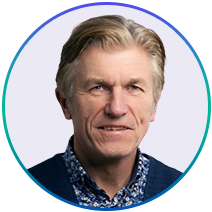
Cryogenics at the University of Twente
Prof. Marcel ter Brake
Emeritus Professor,
University of Twente, The Netherlands
Biography
Marcel ter Brake received his doctoral degree in 1986 at the University of Twente (UT) after which he
became member of the UT/Low-Temperature-Division. Focus of his work was on SQUID-based magnetometer
systems, that all were liquid-helium cooled. The advent of high-temperature superconductivity in
1986 allowed the use of small cryocoolers, and the interfacing of these coolers to ultra-sensitive
devices such as SQUIDs became an important field of Marcel’s research. In this work, he started a
project on MEMS-based microcoolers in 1995. Since the end of the 90’s, in addition to microcooling,
research was performed on sorption-based compressors combined with Joule-Thomson cold stages. These
sorption coolers are essentially vibration free and are of interest specifically for space missions
but can also be beneficial in terrestrial applications.
Marcel ter Brake was appointed Associate Professor at UT in 2000, and Full Professor and chair
holder of Energy, Materials and Systems at UT per January 1st 2010. Marcel retired in April 2024. He
has been board member of the International Cryocooler Conference, co-founder and chairman of the
Cryogenics Society of Europe, and committee member and chairman of the International Cryogenic
Engineering Committee. He is lifetime member of the Cryogenic Society of America and honorary member
of the Cryogenics Society of Europe.
Marcel ter Brake has published more than 230 papers, of which more than 130 in refereed journals. He
has been awarded the Samuel C. Collins Award of the Cryogenic Engineering Conference in 2023.
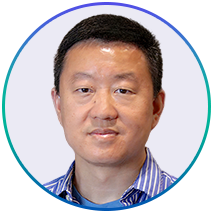
Cryogenic Fluids and Solids for Quantum Science and Technology
Prof. Wei Guo
Florida State University USA
Biography
Dr. Wei Guo is a Professor of Mechanical and Aerospace Engineering at the FAMU-FSU College of
Engineering, Florida State University, Co-Director of the Florida State University Quantum
Initiative, and leader of the Cryogenics Lab at the National High Magnetic Field Laboratory
(Maglab). He received his B.S. in Physics from Wuhan University in 2002 and his Ph.D. in Physics
from Brown University in 2008. After postdoctoral and research scientist appointments at Yale
University, he joined Florida State University in 2012. He currently also serves on the Board of
Directors of the Cryogenic Society of America.
Professor Guo’s research lies at the intersection of cryogenics, quantum fluid dynamics, and quantum
science and engineering. His work spans superfluid helium-4, cryogenic accelerator physics,
helium-based dark matter detection, liquid-hydrogen aviation, and quantum devices based on quantum
fluids and solids. His group is widely recognized for developing advanced flow-visualization
techniques in cryogenic helium and for major contributions to the study of quantum turbulence,
including the direct imaging of quantized vortices in superfluid helium. He has also contributed to
emerging trapped-electron qubit platforms based on solid neon and related quantum materials systems.
Professor Guo has authored over 110 journal publications and has delivered plenary, half-plenary,
and invited talks at major international conferences in cryogenics, low-temperature physics, and
quantum fluids. His contributions have been recognized by election as a Fellow of the American
Physical Society in 2023, the Gordon and Betty Moore Foundation Experimental Physics Investigators
Award in 2022, the Outstanding Research Accomplishment Award from the FAMU-FSU College of
Engineering in 2023, and the JSPS Invitation Fellowship. Through his research, leadership, and
interdisciplinary collaborations, he has played an important role in advancing cryogenics, quantum
materials, and quantum engineering at Florida State University and the Maglab.
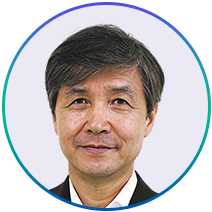
RAON: New Super-conducting Linear Accelerator for Producing the Rare Isotopes
Dr. Myeun Kwon
Institute for Basic Science, Korea
Biography
He graduated from Georgia Institute of Technology with a Ph.D. in Nuclear Engineering in 1990, and spent 35 years in the fields of the accelerator and the nuclear fusion in Korea. He participated in several large research infrastructure construction projects such as the SC accelerator and the experimental SC fusion reactor. He is currently working as the Acting Director at the Institute of Rare Isotope Sciences (IRIS) under the Institute for Basic Science.
Biography
He graduated from Georgia Institute of Technology with a Ph.D. in Nuclear Engineering in 1990, and spent 35 years in the fields of the accelerator and the nuclear fusion in Korea. He participated in several large research infrastructure construction projects such as the SC accelerator and the experimental SC fusion reactor. He is currently working as the Acting Director at the Institute of Rare Isotope Sciences (IRIS) under the Institute for Basic Science.